Soil Health Management
Rebuilding the Living Foundation
Why Soil Health First?
Tea is a perennial, nutrient-intensive crop. The soil's ability to regenerate organic matter, sustain microbial activity, and cycle nutrients determines both yield stability and resilience. Under conventional practices, prolonged chemical use leads to depleted organic carbon, suppressed microbes, hardened soil texture, and declining nutrient-use efficiency. IRF Technology restores this foundation by reactivating the soil biological engine .
Novcom Composting – A Breakthrough in Regenerative Soil Health Management
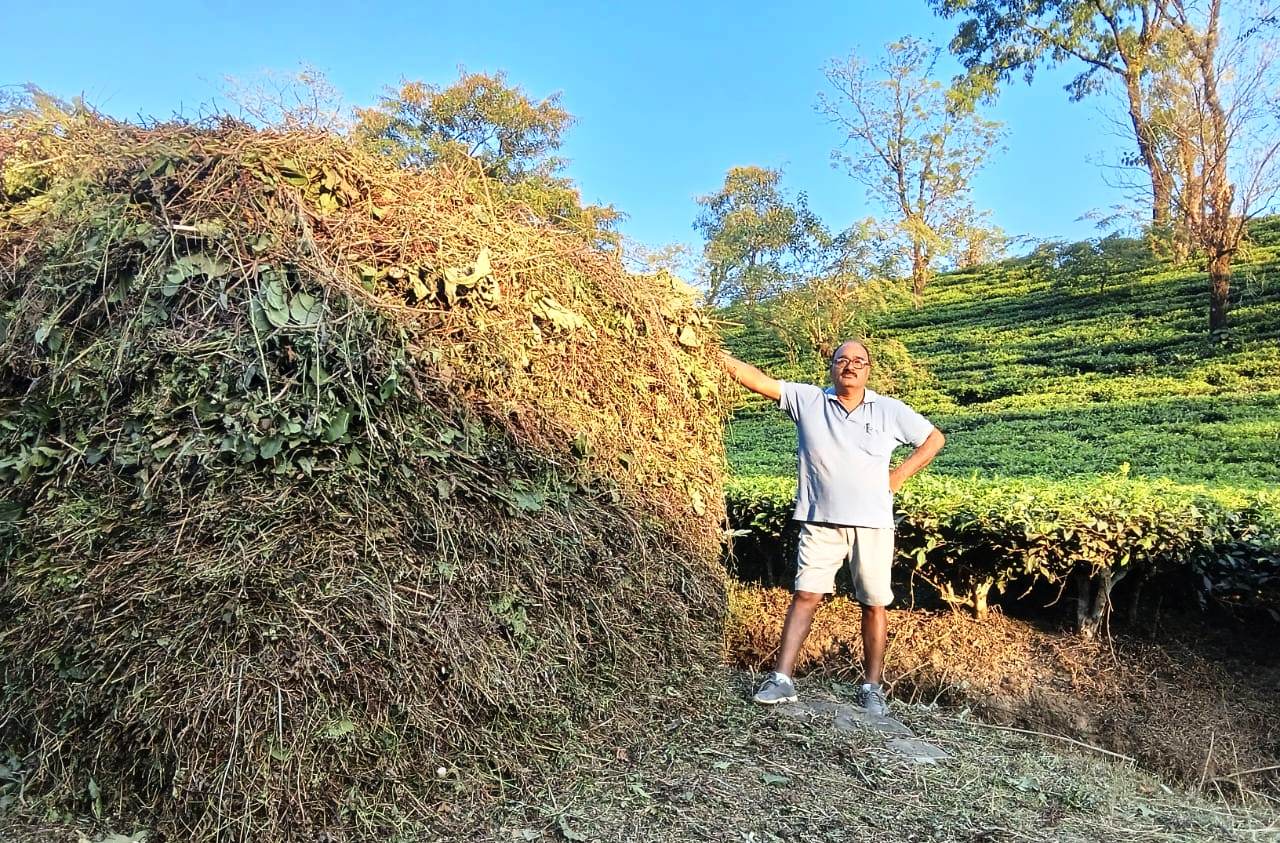 Novcom Composting represents a significant advancement in regenerative soil management within the IRF framework, functioning as a rapid and energy-activated biodegradation system capable of converting a wide range of biodegradable substrates into mature, microbially enriched compost within 21 days. The process consistently generates compost with microbial populations up to 10,000 times higher than those found in conventional composting methods, thereby facilitating immediate enhancement of soil–plant nutrient dynamics following field application. This accelerated microbial proliferation contributes to improved nutrient mineralization, reduced nutrient losses, and the mitigation of herbicide-induced toxicity, while simultaneously lowering the incidence of soil-borne pathogens. Additionally, the high biodegradation efficiency of Novcom composting results in substantially reduced greenhouse gas emissions and production costs relative to traditional composting systems. The application of Novcom Compost strengthens soil biological functioning by promoting diverse, self-regenerating microbial communities, enhancing humus formation, improving soil structure, and activating nutrient cycling of both organic and inorganic fertilizers. These improvements collectively confer natural disease-suppressive properties to the soil environment. As the soil system becomes biologically active and structurally resilient, tea plants exhibit reduced dependence on chemical fertilizers and demonstrate improved physiological health, stress tolerance, and overall productivity.
Soil Health Management in Inhana's way
Under IRF Technology, Soil Health Management forms the primary circle of regeneration , with on-farm NOVCOM composting at its core — but it extends far beyond compost alone. The process begins with systematic soil analysis , allowing every intervention to be guided by scientific evidence rather than assumption. Based on these diagnostics, NOVCOM compost —rich in microbial life—is applied precisely to sections as per requirement, followed by light forking and soil aeration to improve pore space, root respiration, and microbial colonization. IRF further strengthens the soil system through Cow Dung Slurry (CDS) and other bio-concoctions , which enrich microbial diversity, enhance nutrient mineralization, and reduce toxicity from past chemical load. As chemical stress declines, herbicide use is systematically reduced , and wherever necessary, natural cover crops are regenerated to stabilize soil temperature, prevent erosion, fix nitrogen, and support beneficial insects. Together, these practices rebuild the soil's biological engine, improving organic carbon, nutrient-use efficiency, and structural resilience.
To maintain scientific rigor, every batch of NOVCOM compost and its post-application impact on soil health is monitored through laboratory testing —including microbial counts, carbon content, nutrient availability, and toxicity reduction. These results feed back into a dynamic management cycle, helping the estate refine compost dosages, improve section-specific interventions, and plan long-term soil rehabilitation. In this way, Soil Health Management under IRF becomes a continuous, evidence-based, regenerative process , restoring the living foundation upon which sustainable tea productivity, resilience, and quality are built.