The Incredible Journey Of Revival Of Kallinecherra Tea Estate
A Story of Heritage, Hardship, Science, and the Romance of Renewal
The Legacy Begins — A Garden Born at the Foothills of Barail
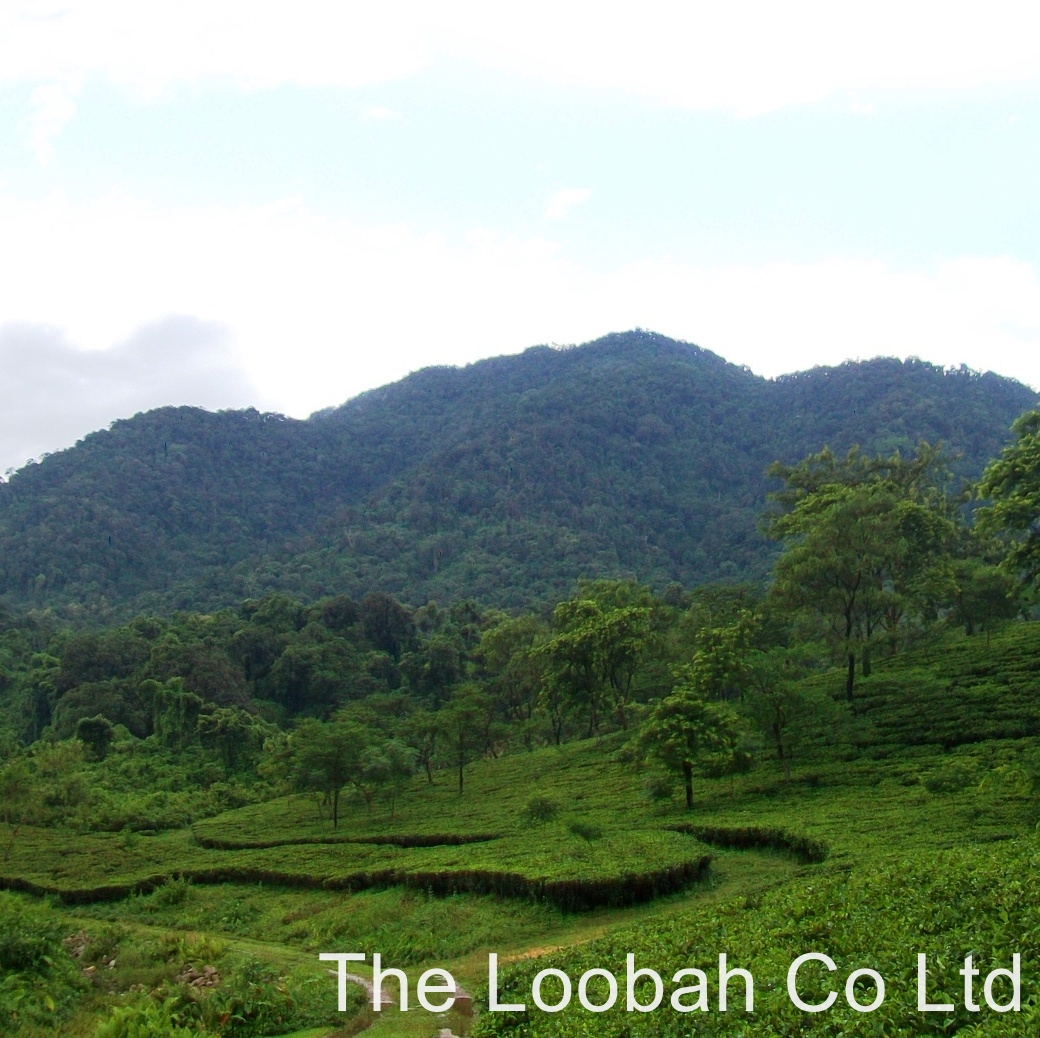 Once established by the British nearly a century ago, Kallinecherra Tea Estate grew where the Barail Mountains descend gently into the fertile plains of the Barak Valley. Though geographically a plains garden of Cachar, Kallinecherra always possessed a subtle inner connection with the great Himalayan range — in its misty mornings, its mineral-rich hill streams, and the quiet whisper of slopes rising behind it. This natural blessing gifted Kallinecherra a distinct flavour identity: brisk yet mellow, aromatic yet serene — a tea that carried the romance of hills in its veins.
In its early years, the garden was celebrated for quality and individuality. But with time came changing managements, shifting strategies, and the growing weight of climate challenges that many Cachar gardens struggled to cope with. Slowly, Kallinecherra slipped into silence. Soil tired, bushes weakened, operations faltered, and its once-proud identity dimmed. The estate that once sang began to forget its song.
Kallinecherra just like many other tea eastate of the Barak Valley withered over the years with poor yield, poor quality poor realization into a unsustainable stage.
II. A New Command — The Search for Revival
Jouney for Survival to Journey of Revival.
- Joining of Mr. George for this journey
- Back up of the Mr. Das Biswas & IORF
- George of the Driver of another transformation where engine was IRF Technology and Novcom Technology development by Dr. P. Das Biswas & IORF
- Mr. George's role is paramount importance because the best technology also need best personto implement for necessary outcome.
- More relevant in a resource poor and unsustainable garden like KC
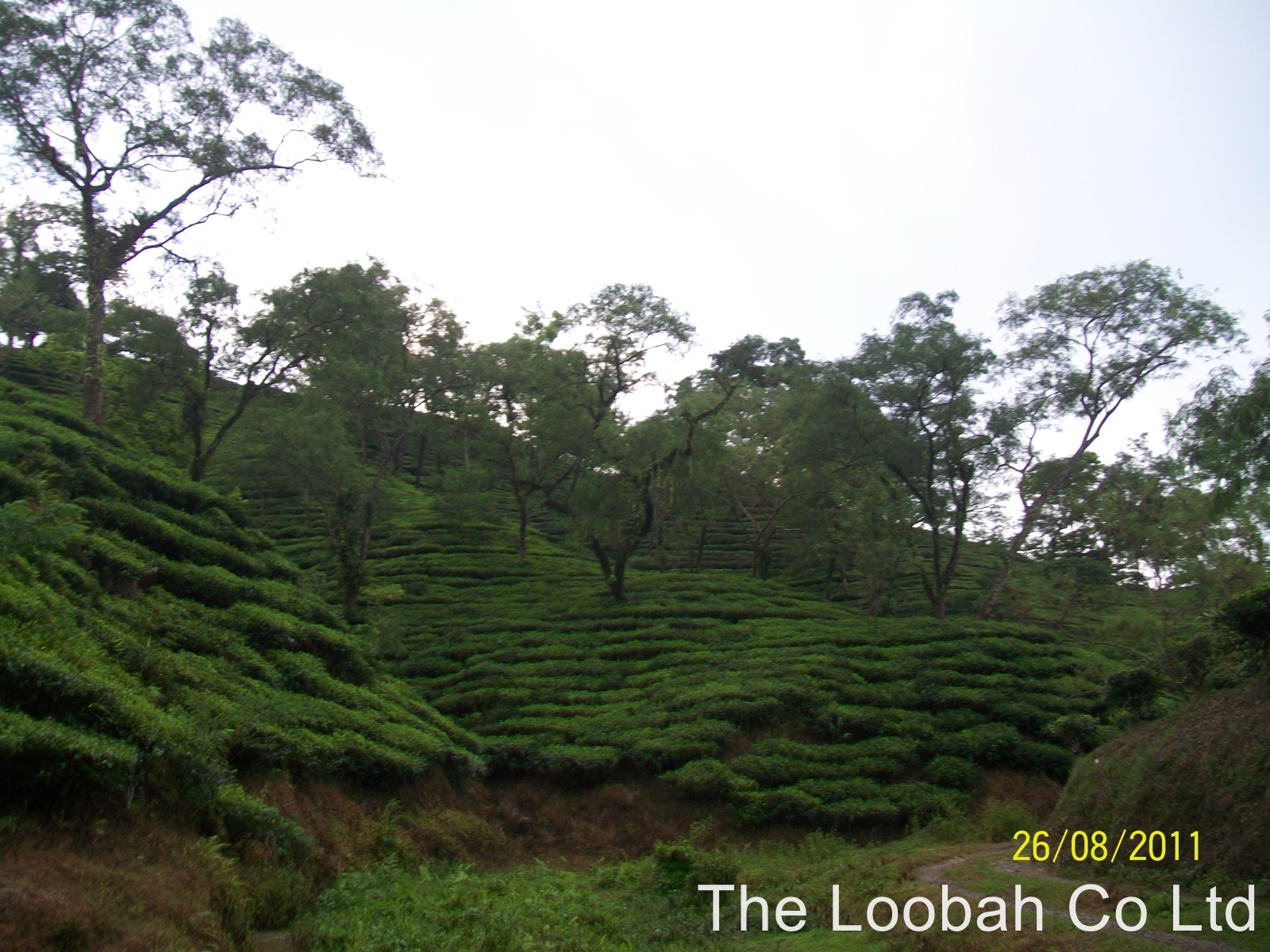 When the present management took charge, they saw not just decline, but possibility. The early years were spent stabilising operations and addressing basic needs, yet in their hearts lived a dream: to bring Kallinecherra back to life . By 2021, they took a decisive step — they invited Mr. Sam George , a veteran planter and a torchbearer of sustainable tea management.
Sam George was no ordinary manager. He was the man who had single-handedly steered another Cachar estate through the world's first transition from conventional to world's First and Only carbon-neutral certified organic tea production . He understood sustainability not as a concept, but as a philosophy. Most importantly, he was deeply acquainted with Inhana Rational Farming (IRF) Technology — its core scientific foundation, its ecological discipline, and its practical management integration. He also shared a long working bond with Dr. P. Das Biswas , the legendary scientist whose innovations in IRF had silently revolutionised sustainable organic tea cultivation across India. Under George's leadership, the estate began to breathe again — operations were streamlined, infrastructure reorganised, and a quiet preparation for a much larger transformation began.
III. 2022 — The Dawn of the Second Birth
The year 2022 changed everything. It was then that Kallinecherra reached out to Dr. P. Das Biswas for scientific guidance. It was then that the estate made its unspoken promise — not just to increase production, but to restore life , soil , biodiversity , and human dignity . Dr. Biswas' strategic vision, rooted in IRF's regenerative science, brought clarity to the estate's pathway. With Mr. George implementing every detail with discipline, the revival began — small, steady, and full of hope — despite ongoing economic hardship.
IV. The Transformation — Step by Scientific Step
Soil: Where the Revival Truly Begins
Even with minimal resources and a long legacy of chemical dependency, Kallinecherra began a quiet yet decisive transition toward ecological regeneration — a shift not driven by forced reduction, but by the scientific substitution at the heart of Inhana Rational Farming (IRF)Technology. In 2022 the estate still relied on Chemical NPK @ 80:15:40 per ha; by 2023 this chemical fertilizer inputs reduced to NPK @ 80:15:30 per ha, and by 2024 to NPK @ 40:10:30 per ha as the soil slowly regained vitality. By 2025, under full-phase IRF implementation, the application of of chemical fertilizer dropped dramatically to just NPK @12:10:12 per ha, because the true nutrient engine had shifted from synthetic fertilizers to a biologically awakened soil enriched with 3 tons/ha of NOVCOM compost likely to be zero or 5:10:12. This was make possible because the real nutrient engine had shifted from bags of chemicals to the living soil itself—strengthened through NOVCOM Compost produced almost entirely from garden weeds, pruning litter and small portions of vegetable market waste. What was once discarded as “waste” became the estate's greatest asset: humified, microbially active compost that restored structure, moisture-holding capacity, nutrient cycling efficiency and the energetic pulse of the soil. Through IRF's scientific lens, Kallinecherra proved that sustainability is not a burden but a biological inevitability—where the land, once given life, returns abundance, resilience and quality beyond what chemicals alone could ever achieve.
Plant Physiology Reawakened
By 2023, Inhana Plant Health Management (IPHM) under Inhana Rational Farming (IRF) Technology began reawakening the inner physiology of Kallinecherra's tea bushes — not through heavy inputs, but through the scientific activation of the plant's own inherent vitality. IPHM works by strengthening endogenous immunity, stimulating the plant's natural defence enzymes (peroxidase, polyphenol oxidase, phenylalanine ammonia lyase), enabling the bushes to resist pests and stress without chemical crutches. Photosynthetic efficiency improved, enhancing light-harvesting and carbon fixation — the very processes that determine biomass, flavour precursors, and polyphenol formation. With soil biology improving and nutrient cycling restored, plants began to exhibit higher nutrient-use efficiency, meaning each gram of nutrient absorbed translated directly into metabolic activity rather than wasteful accumulation. IPHM also brought balance to the plant's internal biochemical pathways: carbohydrate–nitrogen ratios stabilised, hormonal regulation improved, and osmotic balance strengthened, allowing the bushes to tolerate drought, high temperature, and pest pressure naturally. Plant physiology is the care of sustainability – Plant Health – Enhancement of Efficiency.
This physiological harmony — stronger immunity, efficient photosynthesis, balanced metabolism, and enhanced resilience — signalled something extraordinary: the tea bushes began to remember what they once were. Their leaves regained vigour, their canopy grew fuller, and their aroma precursors deepened, marking the silent return of the original Kallinecherra spirit that had long been buried beneath years of stress and chemical fatigue..
Pesticides and Herbicides — No Longer Chains
Long before IRF arrived, Kallinecherra had the reputation of being a low-pesticide garden, applying barely four rounds of insecticides in 2022 — yet it was IRF Technology that transformed this modest beginning into a remarkable ecological victory. Once the estate adopted Inhana Rational Farming's ecological and physiological principles , pest pressure began to decline not because chemicals were withheld, but because the ecosystem regained its natural regulatory power . By 2025, pesticide use had fallen to just 0.75 rounds , and herbicide application dropped by more than 50% , a shift made possible through the restoration of soil microbial diversity, improved canopy microclimate, strengthened plant immunity, and the resurgence of beneficial predators suppressed during the chemical era. Pests no longer dominated because IRF rebalanced the internal and external environment — a living demonstration that when soil biology thrives and plant physiology stabilizes, pest outbreaks lose their foothold. Colourimetric pesticide assays conducted randomly across the estate confirmed what the fields already whispered: no detectable pesticide residues . Kallinecherra's tea complied fully with FSSAI Organic standards and stringent EU residue norms , an achievement almost unheard of for an estate still in transition from chemical dependency. IRF did not merely reduce pesticides—it broke the chains , proving that scientific ecological management can free a tea garden from toxicity without compromising productivity or quality.
Quality Rediscovered — The Soul Returns
For years, Kallinecherra's quality profile had dimmed; the estate managed barely twenty plucking rounds a season, with fine-leaf percentages hovering around 20–21%—a pattern common among struggling Cachar gardens. But as IRF Technology and disciplined field management took root, the garden began to rediscover its forgotten soul. Plucking rounds increased dramatically to nearly 30 rounds , while fine-leaf percentage rose to 30–35% , signalling a profound revival in bush health, apical dominance, and shoot regeneration cycles. These physiological improvements translated directly into the cup: colour became brighter, liquor deeper and more lively, briskness more pronounced, and the signature Kallinecherra fragrance—lost for decades—returned with surprising clarity. Remarkably, this qualitative leap did not come at the cost of yield. Despite a more than 30% increase in fine plucking and tighter harvesting cycles, green-leaf production not only stabilised but increased—rising from erratic figures below 10 lakh kg/year to 11.5 lakh kg/year by 2025 . This harmonious rise in both yield and quality reflects the essence of genuine sustainability: a system where improved physiology, balanced nutrition, living soil, and gentle ecological care allow the plant to express its best without exploitation. At Kallinecherra, quality was not imposed—it returned , unfolding naturally as the garden healed and remembered what it was always meant to be.
Model Net Zero or Net Zero Model
• No to Minimum Urea N – Qualitative supplementation by Novcom – means Higher Efficiency of Plant system – means regeneration impacting Qualitatively Changes in the Carbon Footprint
• Minimize / Reduce Pesticide – means Higher Plant efficiency and Plant Health – impacting Qualitative change in C- footprint
Rising Towards Greatness — Certification, Documentation, Net Zero
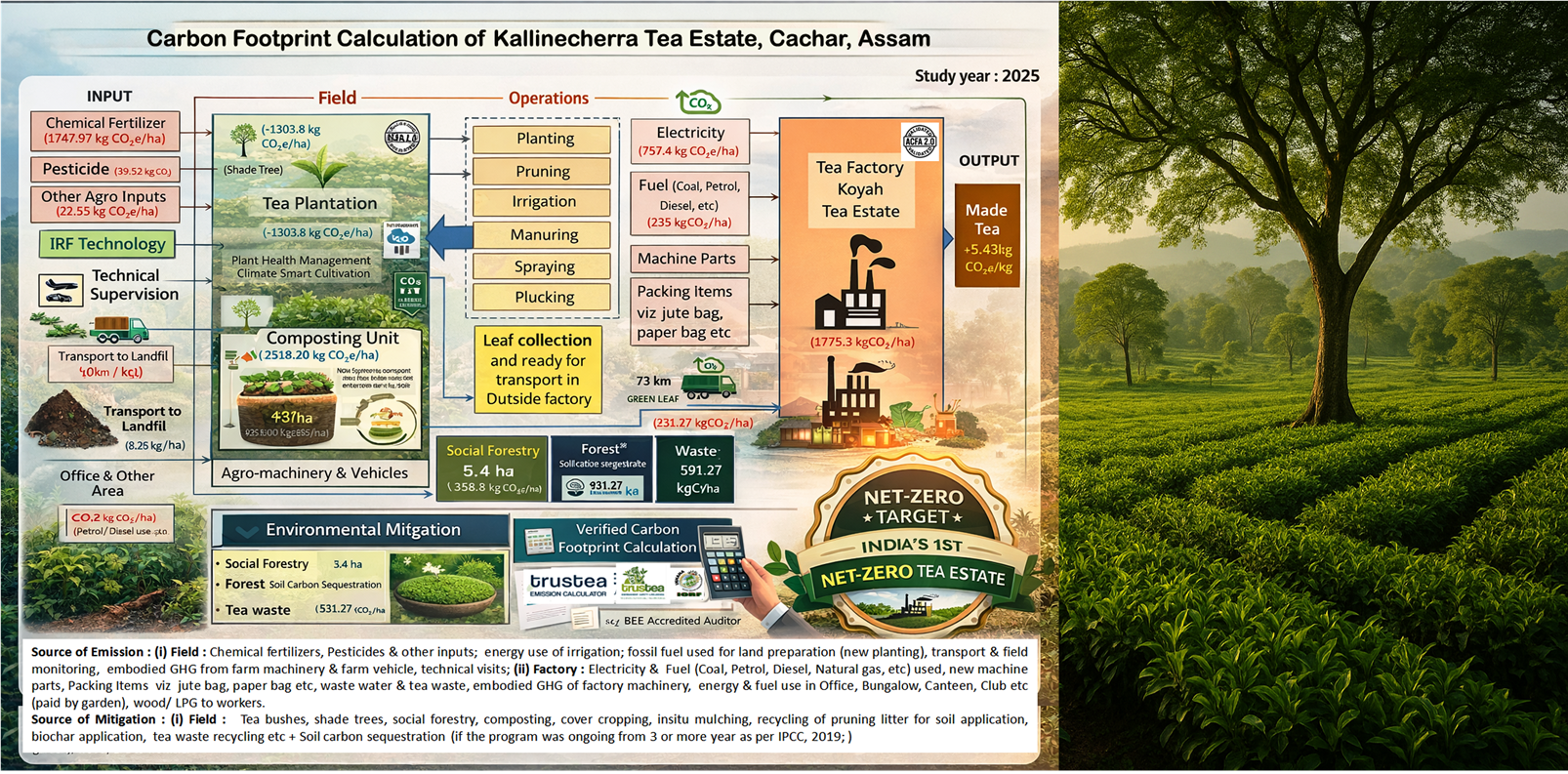
Kallinecherra today stands at a turning point where science, sincerity, and the timeless spirit of tea craftsmanship converge. With the discipline of IRF technology and the determination of a team that refused to let a heritage garden fade, Kallinecherra has entered a new era of meticulous scientific governance. A complete carbon-footprint baseline has already been established, resource-use mapping is underway, and comprehensive Net-Zero documentation is progressing with precision. The garden has also stepped confidently into the Trustea certification pathway — a rigorous system that examines agrochemical responsibility, soil and water conservation, food safety, worker well-being, and transparent traceability. Each step strengthens the estate's credibility and reflects its commitment not just to compliance, but to genuine ecological and social integrity. No other Cachar garden attempting sustainability has reached this depth of structured transformation. And now, with its ecology healing, its carbon logic stabilising, and its documentation becoming world-class, Kallinecherra is preparing for a landmark achievement — to become India's First Net-Zero Tea Estate . This ambition is not marketing; it is the natural culmination of regenerative science, relentless documentation, and the love of tea that flows through every leaf and every worker. A garden once struggling is now rising with a conviction that blends hope with hard science — a place where sustainability is not a slogan, but a lived reality.
The Phoenix Rises — A Garden Reborn
From an estate struggling for survival to a symbol of scientific sustainability, Kallinecherra's journey has been nothing less than a phoenix rising from its own ashes.
The hills whisper their cool breath.
The soil hums with microbial life.
The tea bushes glow with renewed vitality.
The workers smile again, proud of the garden they nurture.
Kallinecherra is no longer just a tea estate, It is a living testament — to resilience, to science, to love for the land.
It is a place where
- heritage meets innovation
- romance meets ecology
- hardship becomes strength
- tea becomes a story of rebirth
This is Kallinecherra.
A garden reborn.
A legacy revived.
A future reimagined.